- By Sunlight Pipe Fittings Pvt Ltd
- 23 Sep , 2026
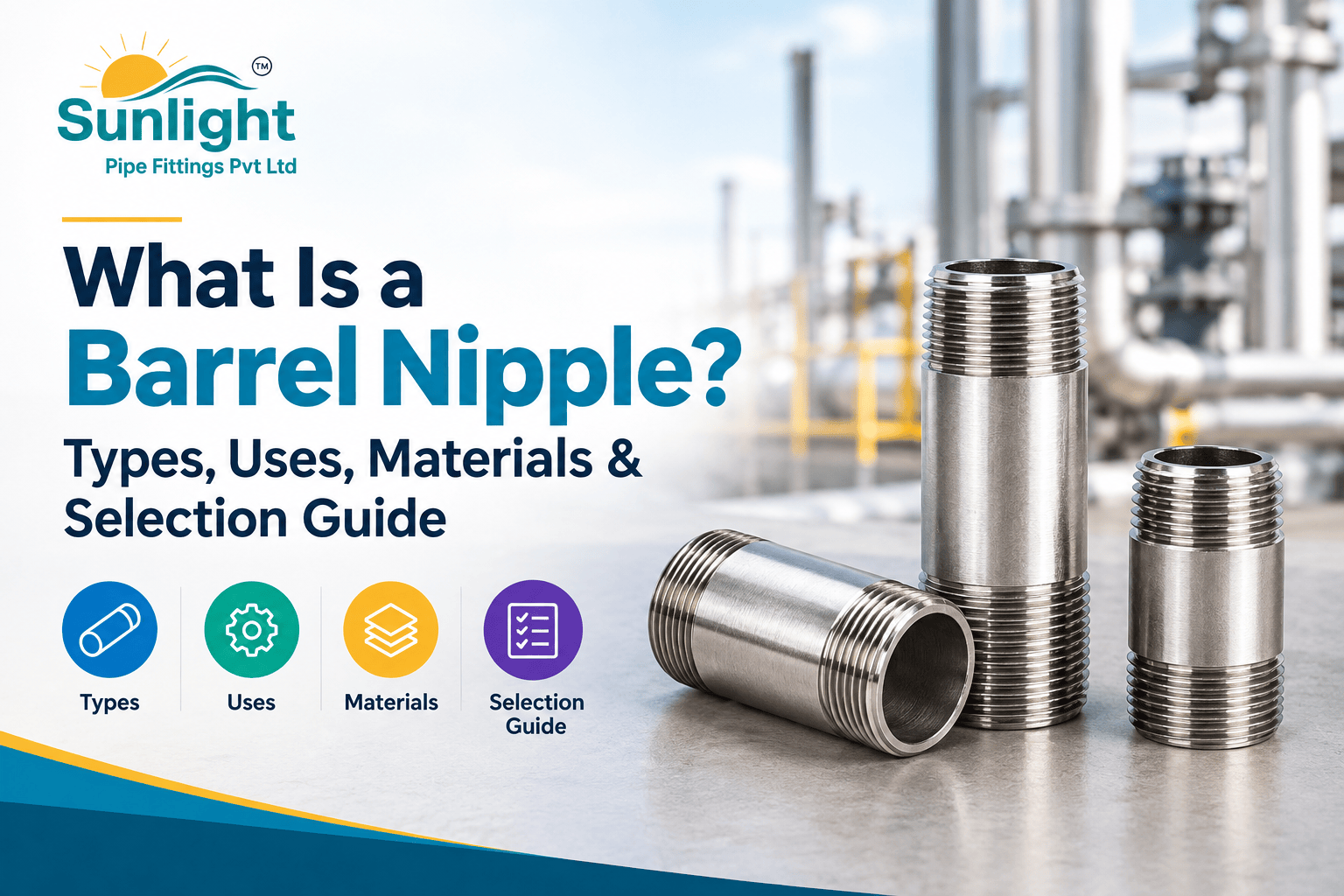
What Is a Barrel Nipple? Types, Uses, Materials & Selection Guide
If you've spent any time around industrial piping, you've probably come across a barrel nipple without even realizing it had a name. It's one of those small, unglamorous fittings that quietly holds a system together — a short threaded piece of pipe used to connect two components. It has threaded ends with a plain cylindrical section running between them, and that middle section is what lets it either join two fittings or create a bit of breathing room between them.
Simple as it looks, picking the right one isn't just a matter of eyeballing the size. Thread type, material, length, the conditions it'll operate under, and how well it plays with the rest of your piping — all of that matters just as much as the diameter.
How Does a Barrel Nipple Work?
The idea behind it is pretty simple: it connects components that already have matching female threads. Once you thread it in properly, it becomes just another link in the piping chain.
That middle body section is really the whole point — it gives you the length you need between two components that, for whatever reason, shouldn't sit flush against each other.
That said, getting a proper fit takes more than matching the nominal size. You'll want to double-check the thread standard, material, dimensions, and the conditions the fitting will actually see in service. And here's a detail people sometimes miss: NPT and BSP/BSPT threads aren't interchangeable, so it's worth confirming exactly which standard your project calls for before you order anything.
What Are the Main Barrel Nipple Types?
Barrel nipple types aren't one-size-fits-all — they vary by material, dimensions, thread configuration, and how they're built.
Standard Barrel Nipple
This is the basic version: threaded ends with a plain cylindrical middle. It's the go-to choice when you need a threaded connection with a set distance between two components.
Stainless Steel Barrel Nipple
When corrosion resistance and long-term durability matter, stainless steel tends to be the material people reach for. Even so, the specific grade still needs to match the fluid, temperature, and environment it'll be exposed to.
Carbon Steel Barrel Nipple
Carbon steel works well when its mechanical strength and general properties line up with what the system needs. As with any fitting, you want to base the material choice on actual service conditions — not just what's cheapest.
Different Thread Configurations
Thread configuration deserves its own mention here. The thread type has to match whatever it's connecting to, full stop. Get this wrong and you're looking at poor engagement, leaks, or a headache during installation.
What Are Barrel Nipple Uses?
Barrel nipple uses mostly come down to connecting or extending threaded sections of pipe. Because it's so compact, it's handy in places where a full pipe length would be overkill.
You'll typically find them in:
- Industrial process piping
- Water and utility systems
- Oil and gas equipment
- Chemical processing systems
- Petrochemical installations
- Plumbing assemblies
- Valve and equipment connections
- General fluid-handling systems
What it's actually used for comes down to the material, pressure rating, dimensions, thread spec, and whatever's flowing through the system. A fitting that's perfect for one job might be completely wrong for another.
How Do Barrel Nipple Sizes Affect Selection?
Getting barrel nipple sizes right starts with looking at the piping and equipment you're connecting to — and the nominal pipe size is really just the starting point, not the whole picture.
Before you place an order, it's worth running through:
- Nominal pipe size – Make sure it actually matches the connected components.
- Overall length – This sets the spacing between whatever you're connecting.
- Thread size and type – Both ends need to be compatible with the mating parts.
- Wall thickness or schedule – Check this against the required spec where it applies.
- Operating conditions – Pressure and temperature can shift what material and construction you need.
- Project specifications – Confirm any standards or material requirements the project calls for.
For industrial purchasing especially, just specifying the diameter leaves a lot on the table. Length, material, schedule, thread type, and build style all factor into whether a fitting is actually right for the job.
Which Materials Are Used to Make Barrel Nipples?
Material choice really comes down to where the fitting is going to live and work.
Stainless Steel
This is a common pick when corrosion resistance is a priority. Different grades bring different properties to the table, so the grade needs to match the actual service conditions.
Carbon Steel
You'll see carbon steel a lot in industrial piping, where its strength, temperature tolerance, and general compatibility make it a solid fit.
Alloy Steel
For more demanding temperature or mechanical requirements, alloy materials might be worth considering, depending on what the applicable spec calls for.
Bottom line: there's no single "correct" material for every piping system. Fluid type, corrosion exposure, pressure, temperature, and the relevant standards should all guide the decision.
What Is an SS Barrel Nipple?
An SS barrel nipple is simply the stainless steel version of this fitting. People choose it when the application calls for stainless steel's properties — corrosion resistance being the big one, particularly in environments where that resistance actually matters.
You'll often see stainless steel show up in process equipment, chemical environments, water systems, and anywhere else corrosion resistance is a real design concern.
That said, just saying "stainless steel" isn't enough on its own. You still need to check the specific grade against the environment and requirements of the project.
How to Choose the Right Barrel Nipple for Your Piping System
Walking through a proper selection process can save you from fitment issues and service problems down the line.
1. Start With the Connection Size
Check the nominal size of whatever the nipple is connecting to — pipe, valve, or fitting. Don't guess based on how it looks or a rough measurement.
2. Confirm the Thread Standard
Figure out whether the connection needs NPT, BSP, BSPT, or something else entirely. Thread compatibility isn't optional here.
3. Select the Material
Think through the fluid, corrosion exposure, temperature, pressure, and surrounding environment before locking in a material.
4. Check the Required Length
Make sure the length gives you the spacing you need without putting unnecessary stress on the system or complicating installation.
5. Consider Wall Thickness and Schedule
For industrial jobs, verify wall thickness or schedule against both the project spec and the actual operating conditions.
6. Verify Applicable Standards
If the project has specific dimensional, material, or thread requirements, check them before you order.
7. Consider Manufacturing Quality
Thread accuracy, dimensional consistency, material quality, and inspection standards all play into how reliable the fitting ends up being.
Barrel Nipple vs Other Pipe Nipples: What's the Difference?
Pipe nipples come in quite a few configurations, and the differences mostly boil down to body design, length, threading, and what the connection is meant to do.
A close nipple, for instance, is threaded along nearly its entire length — useful when components need to sit close together. A hex nipple has a hexagonal middle section that gives you something to grip with a wrench. A reducing or swage nipple is built specifically to connect two different pipe sizes.
A barrel nipple, by contrast, has that cylindrical body between the threaded ends. So really, the right choice depends on available space, connection requirements, how it'll be installed, and the service conditions — not just defaulting to one type for everything.
Common Selection Mistakes to Avoid
Even fitting this small can cause real problems if the specs get overlooked. Some of the more common mistakes:
- Selecting the wrong connection size
- Mixing incompatible thread standards
- Choosing material based on cost alone
- Ignoring operating temperature
- Overlooking pressure requirements
- Ordering the wrong overall length
- Failing to account for corrosion exposure
- Skipping over project specifications
Taking a few extra minutes to nail down these details before ordering can save a lot of hassle during installation.
Why Quality Matters in a Threaded Piping Connection
A threaded fitting doesn't work in isolation — it's part of a bigger piping assembly. Poorly cut threads, inconsistent dimensions, the wrong material, or an incorrect spec can all cause trouble once it's installed and in service.
Quality here isn't just about appearance. It's about dimensional accuracy, thread quality, consistent materials, tight manufacturing control, and whether the finished piece actually meets what the application demands.
For industrial projects, it pays to give your manufacturer or supplier clear, specific requirements — size, material, thread type, length, applicable standards, and service conditions.
FAQs
1. What is a barrel nipple used for?
It's generally used to connect two compatible female-threaded components or to create a set extension between threaded piping parts. How well it works depends on size, thread type, material, dimensions, pressure, temperature, and service conditions.
2. What are the main barrel nipple types?
They're typically distinguished by material, dimensions, thread configuration, and body design — stainless steel and carbon steel being common material choices, with thread standards and dimensions chosen to fit the piping requirement.
3. How do I choose the correct barrel nipple size?
Start with the nominal pipe size, then confirm the thread type, overall length, wall thickness or schedule (where relevant), and the connection requirements. It needs to match whatever it's connecting to.
4. What is an SS barrel nipple?
It's a stainless steel threaded nipple with a cylindrical body, chosen for applications where corrosion resistance and durability are a priority for the operating environment.
5. What materials are used for barrel nipples?
Stainless steel, carbon steel, and certain alloy steels are the common options. Which one's right depends on the fluid, temperature, pressure, corrosion conditions, and project spec.
Conclusion
Choosing the right piping components isn't just about grabbing something that fits — it takes attention to material quality, dimensional accuracy, connection requirements, and the actual conditions the fitting will face. Having a manufacturing partner you can rely on makes this whole process a lot easier, since consistent quality takes one variable off your plate.
Sunlight Pipe Fittings Pvt Ltd focuses on quality manufacturing, precision, and dependable service for customers who need piping solutions they can count on. With a focus on consistency and understanding what different industrial applications actually require, the brand continues to serve customers where quality and reliability really matter.